

The imposter syndrome was kicking in hard.
I was just a few days into my first polar expedition, standing on a ship in the middle of the high Arctic surrounded by professional photographers from National Geographic, BBC, and Getty Images.
We’d started in Svalbard, a small Norwegian archipelago adrift in the Arctic Ocean, and were searching for polar bears aboard Quark’s Ocean Adventurer. A travel company had sent me here to create content about the experience that it could put on its website and in its brochures: quotes from the expedition leaders and scientists, notes about the accommodation and food, and photos of everything.
This was my first big solo assignment overseas, so naturally I wanted a money shot of a polar bear I could wave in front of my boss to say, “mission accomplished.”
By sheer luck, I was booked on a photography-themed expedition with photography mentors from major publications onboard to teach eager guests about their craft. Most of the guests had shelled out big on impressively phallic lenses and “big camera” tech, whereas I’d borrowed a camera from my boss. It’s cold dials and buttons felt alien in my hands. They say size doesn’t matter, but I felt strangely intimidated.
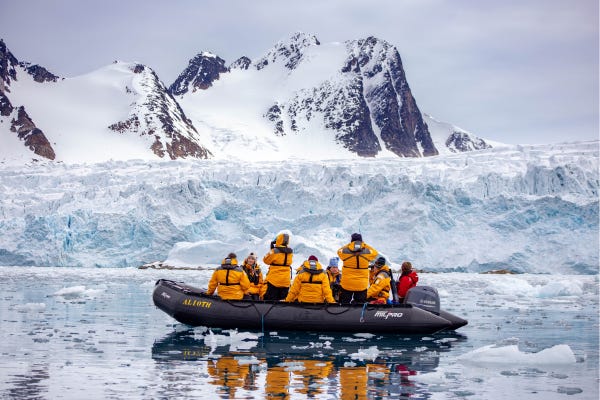
Each day we’d go out in Zodiacs to photograph whatever wildlife or scenery we could find, then return to the ship in the evening for a review session with our mentors, who would offer a critique and feedback. My entry-level 75-300mm lens couldn’t get the same reach or detail as other guests with their more advanced gear.
Then one evening everyone was seated for dinner when an alarm rang over the ship’s speakers. The bridge had spotted a lone polar bear headed our way. In a flurry of whipping jackets and camera lenses, everyone was standing at the bow watching this bear as it lumbered closer and closer towards the ship. The bow was completely still and silent – except for the sound of shutters clicking – when the bear finally arrived and started curiously inspecting the ship.
The great white bear lumbered directly beneath me, about 10 metres directly below where I sat. I lifted my camera, lined up the shot and there was a very brief moment where our eyes connected through the lens. It was an enchanting connection that still gives me chills today.
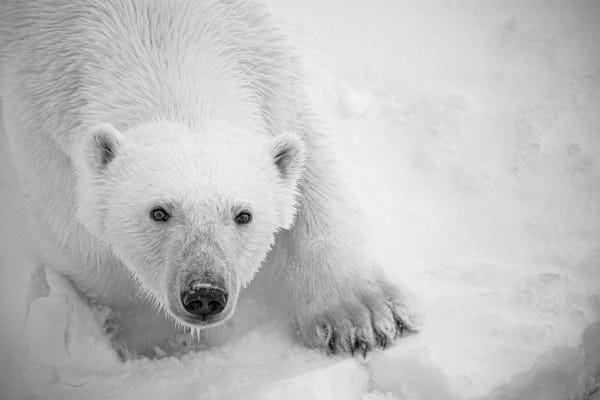
I was thrilled. I’d managed to capture the money shot. I looked around and saw that many other photographers were fiddling with their cameras in frustration – their lenses were too big to photograph a subject that close to the camera.
What I thought was a handicap turned out to be the thing that helped me capture one of the best photos of the trip.
Since that voyage, I’ve chosen to view my lens choices as a creative challenge. I may be in the field with a wide angle or a telephoto lens, and I know that this means I might miss something, but it’s also an opportunity to think laterally and push my boundaries.
I’d love to hear from you if you’ve ever been in a pinch and managed to solve your problem with a bit of creativity.
Safe travels, JM
The Takeaway in 25 Words or Less
It’s easy to be distracted seeing what everyone else is doing. Use the tools, creativity and skills you have to do something different.
Catch up: Why you should track your pitches
Two weeks ago, I shared one of the handy tools I use to keep on track with my pitching and help measure success – plus a template you can use right away.
Next time: Real talk – editors aren’t stealing your ideas
I’ll dive right into one of the most frequent complaints I see from writers on social media and share what you can do to fix it.
Don’t miss out: subscribe now, read later.
I can't tell you the number of times I've brought my camera to shoot a particular thing, and the light just isn't working (too glary, too much contrast, whatever the reason), so I've snapped the shot on my Samsung Galaxy S22 Ultra quickly, and it's given me exactly what I need. The automatic light balancing on the phone can be a lifesaver! Also, the fact that it has a ridiculous zoom on it meant I got the shots I needed of proboscis monkeys in the trees that my lens just couldn't get. Sure, they weren't super crisp photos, but with a little bit of a touch-up in Lightroom to fix the contrast, they absolutely did the trick.
Having options is better than not having any options at all!